





 During your visit, generate a QR code for fast and seamless entry to the museum.

 Daytime Visiting Hours: 09:00 - 19:00
 Alemdar, Yerebatan Cd. 1/3, 34110 Fatih/İstanbul
BASILICA CISTERN
Museum Card holders can enter the Basilica Cistern for FREE during daytime visiting hours.
About Museum Card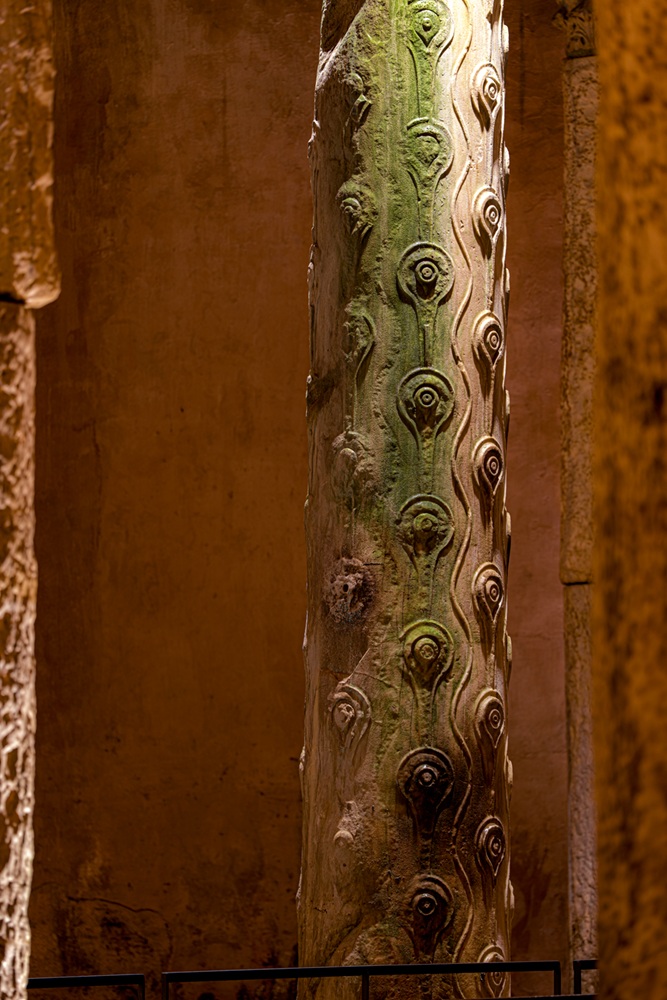
About Us
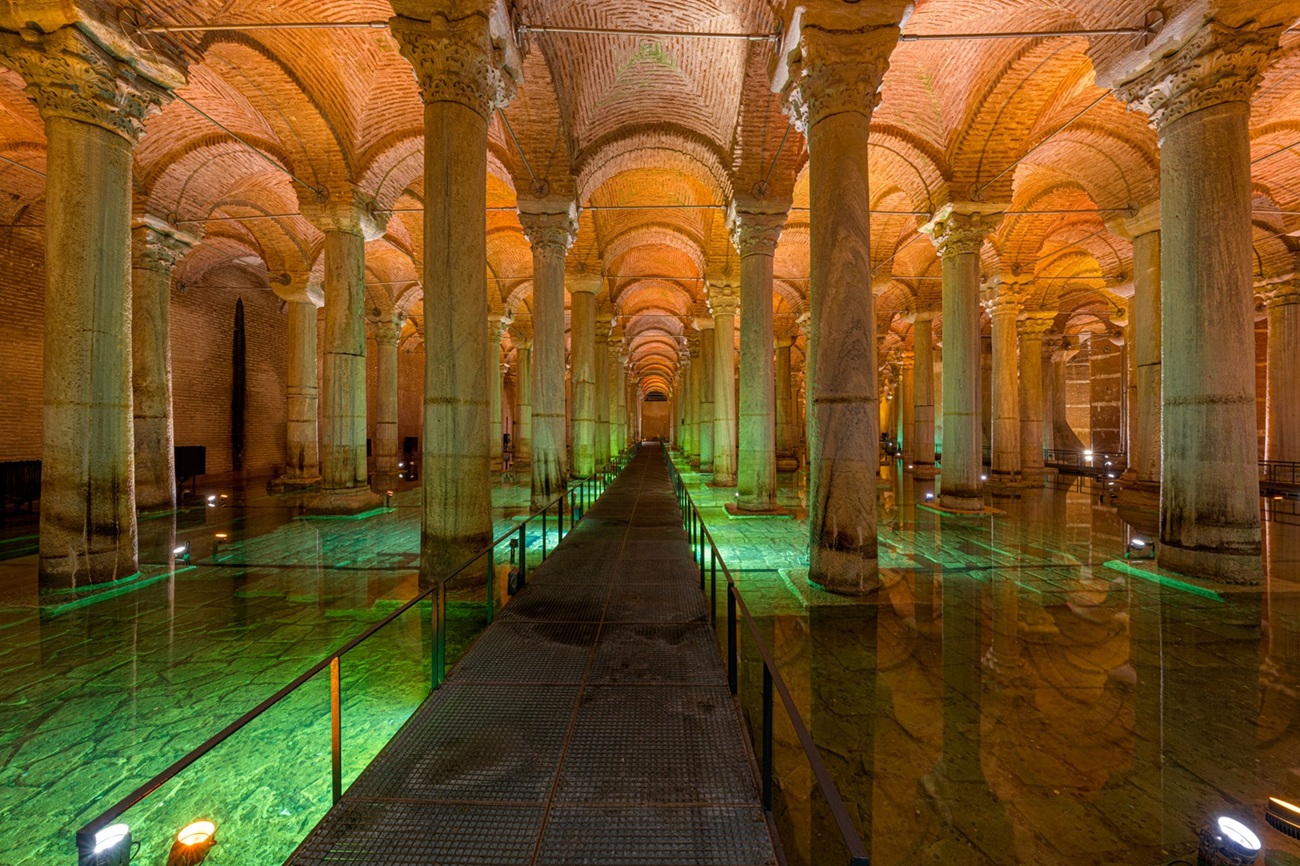
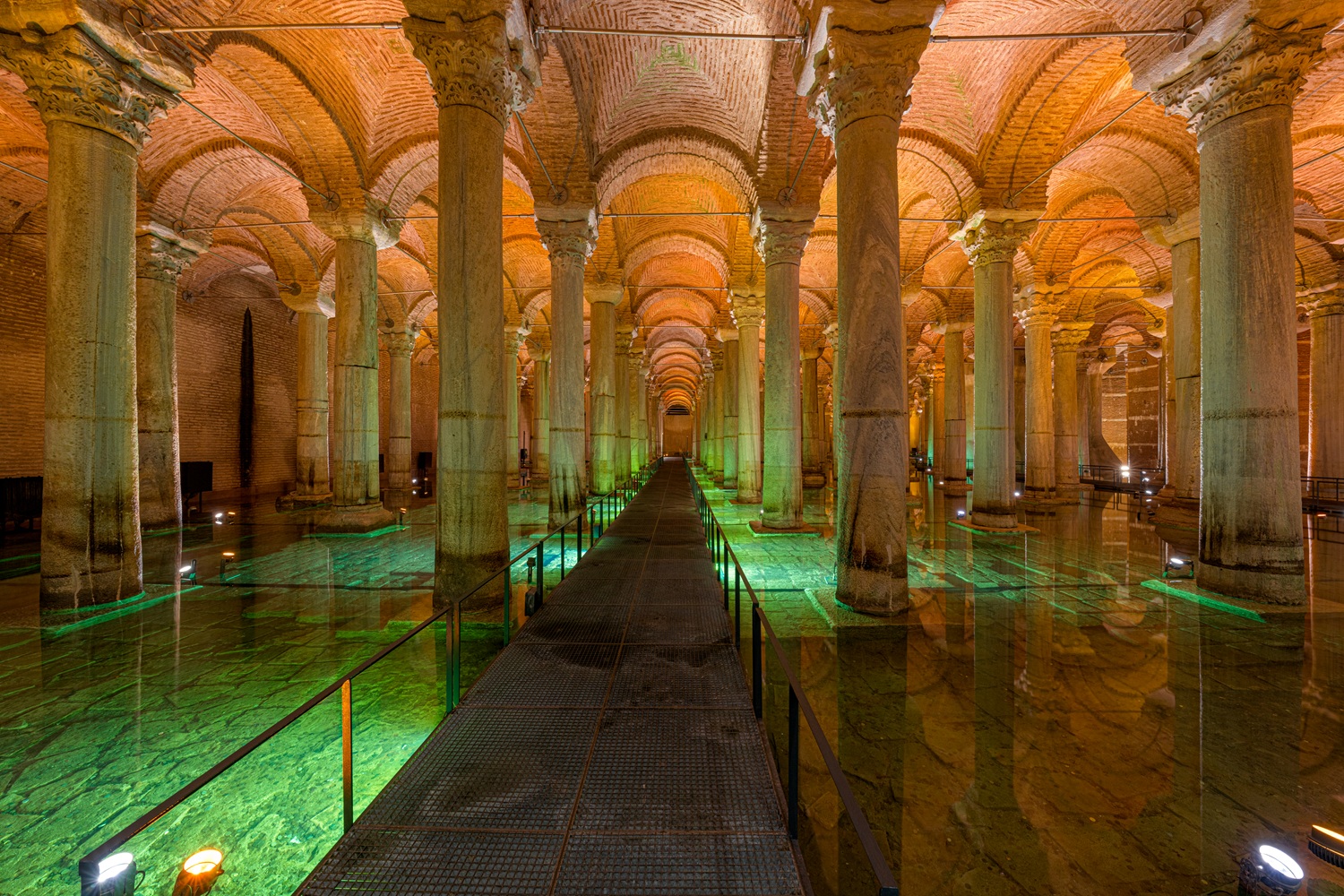
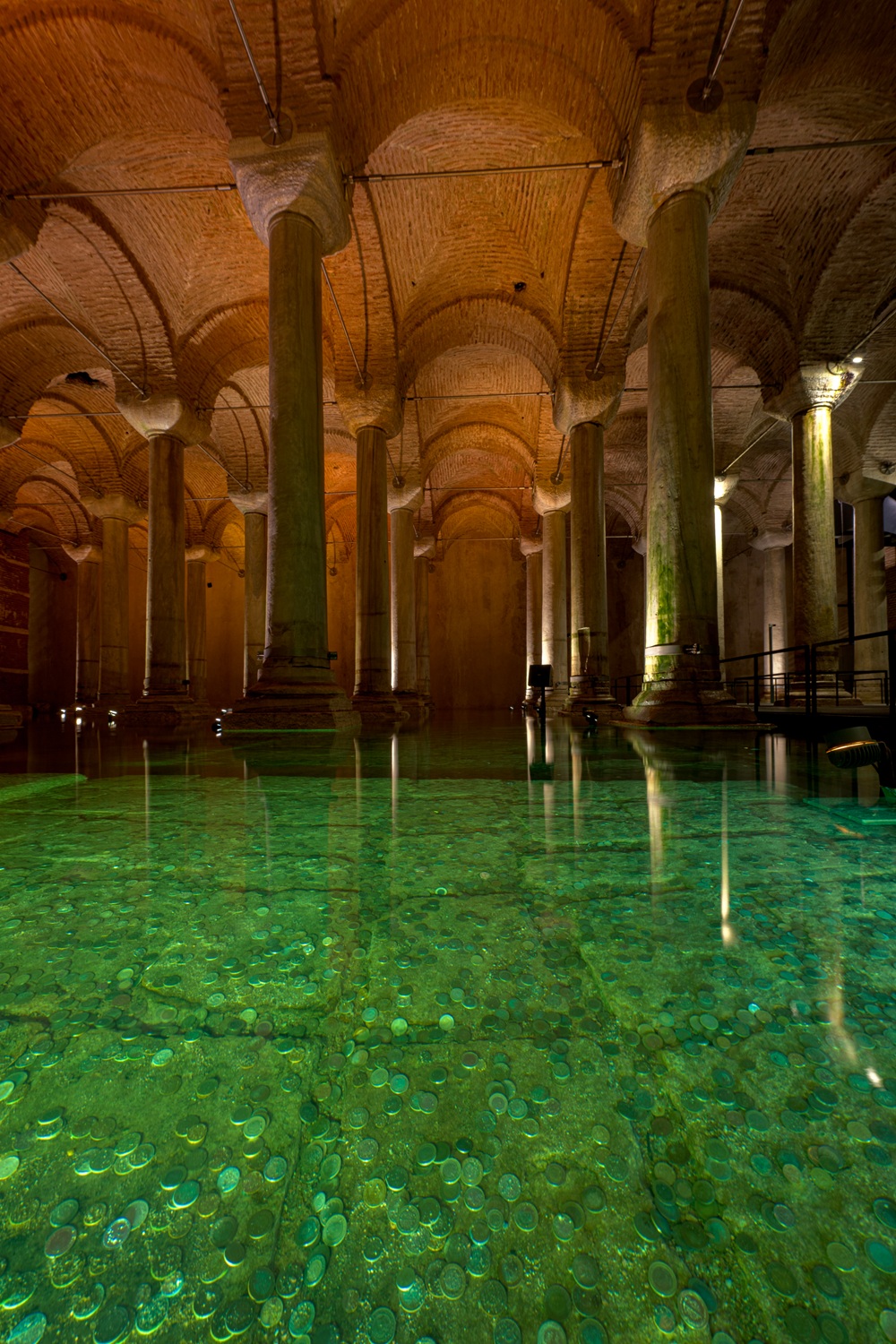
The Basilica Cistern is one of the most impressive cultural heritage sites reflecting Istanbul’s rich historical legacy. Constructed during the reign of Emperor Justinian I (527–565 AD), this magnificent underground structure became known among locals as the “Sunken Palace” (Yerebatan Sarayı) due to the marble columns that appear to rise from the water. The structure, whose Latin name is Cistern Basilica, is also referred to as the “Basilica Cistern,” a name derived from the Stoa Basilica that once stood on the same site.
With a water storage capacity of approximately 80,000 tons, the Basilica Cistern is the largest covered cistern in Istanbul. It features a rectangular plan measuring 140 meters in length and 70 meters in width, covering an area of nearly 10,000 square meters. Historical records indicate that the cistern was supplied by aqueducts and rainwater and provided water for many years to the Great Palace and other surrounding structures. It also received water through the Hadrian Aqueduct.
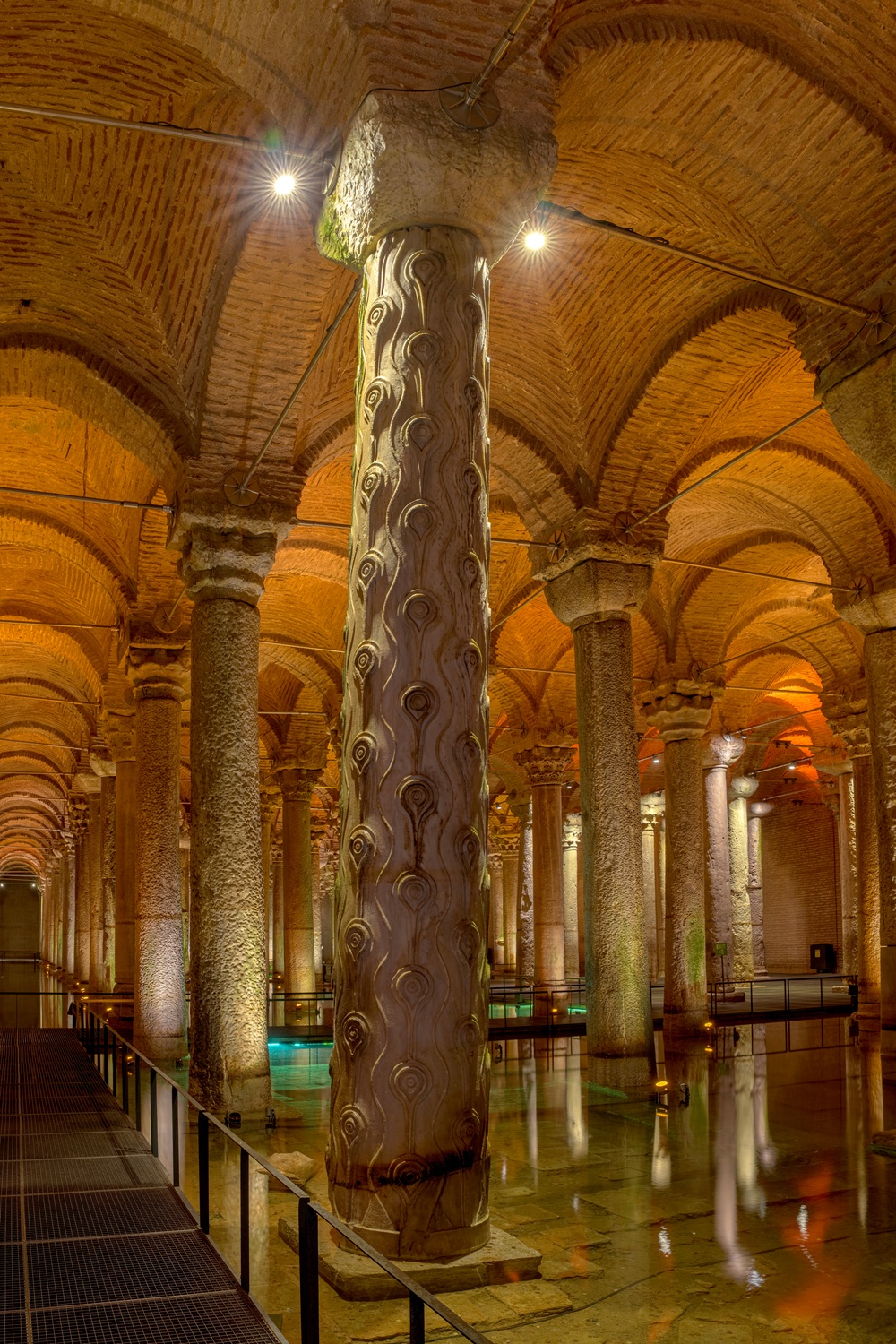
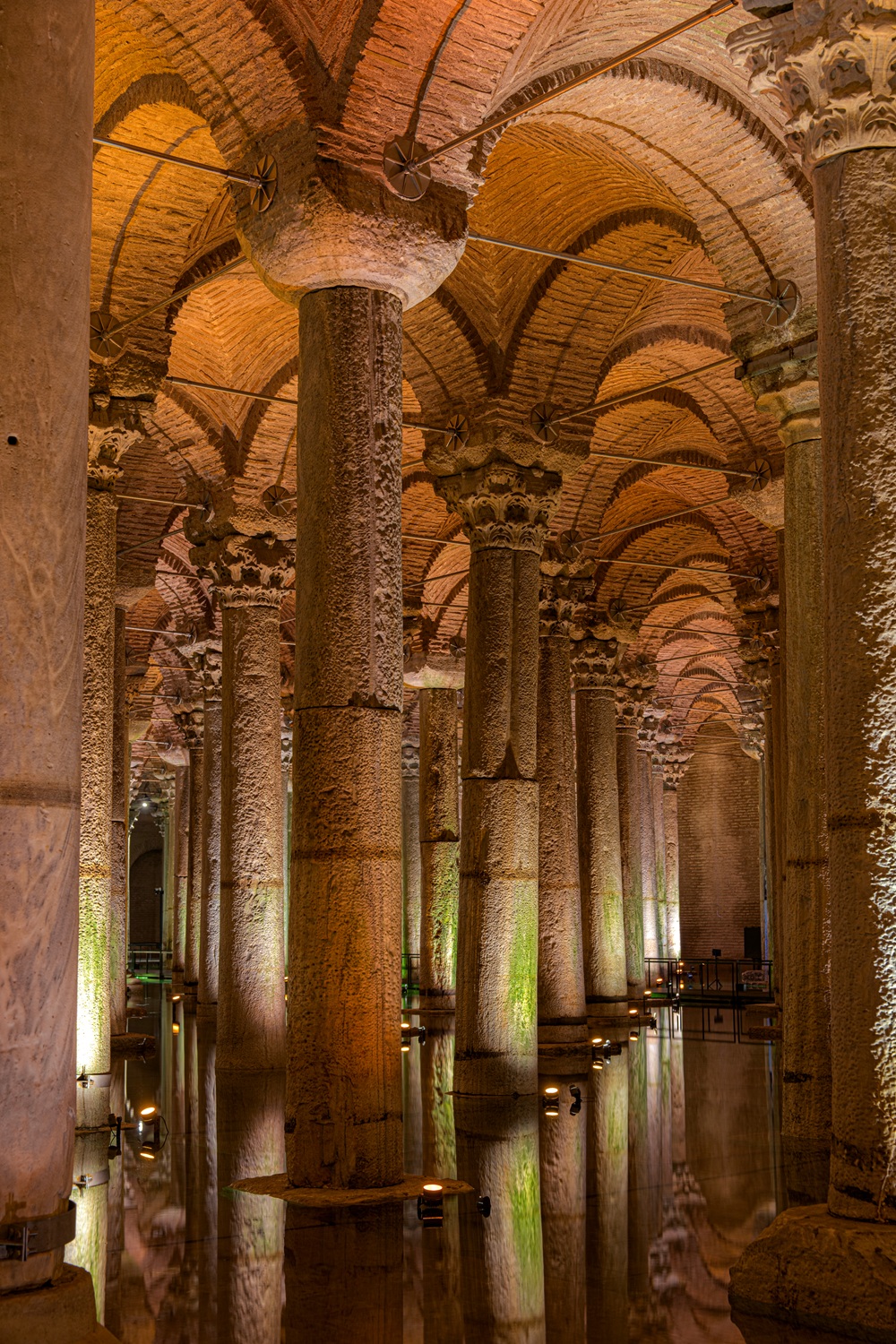
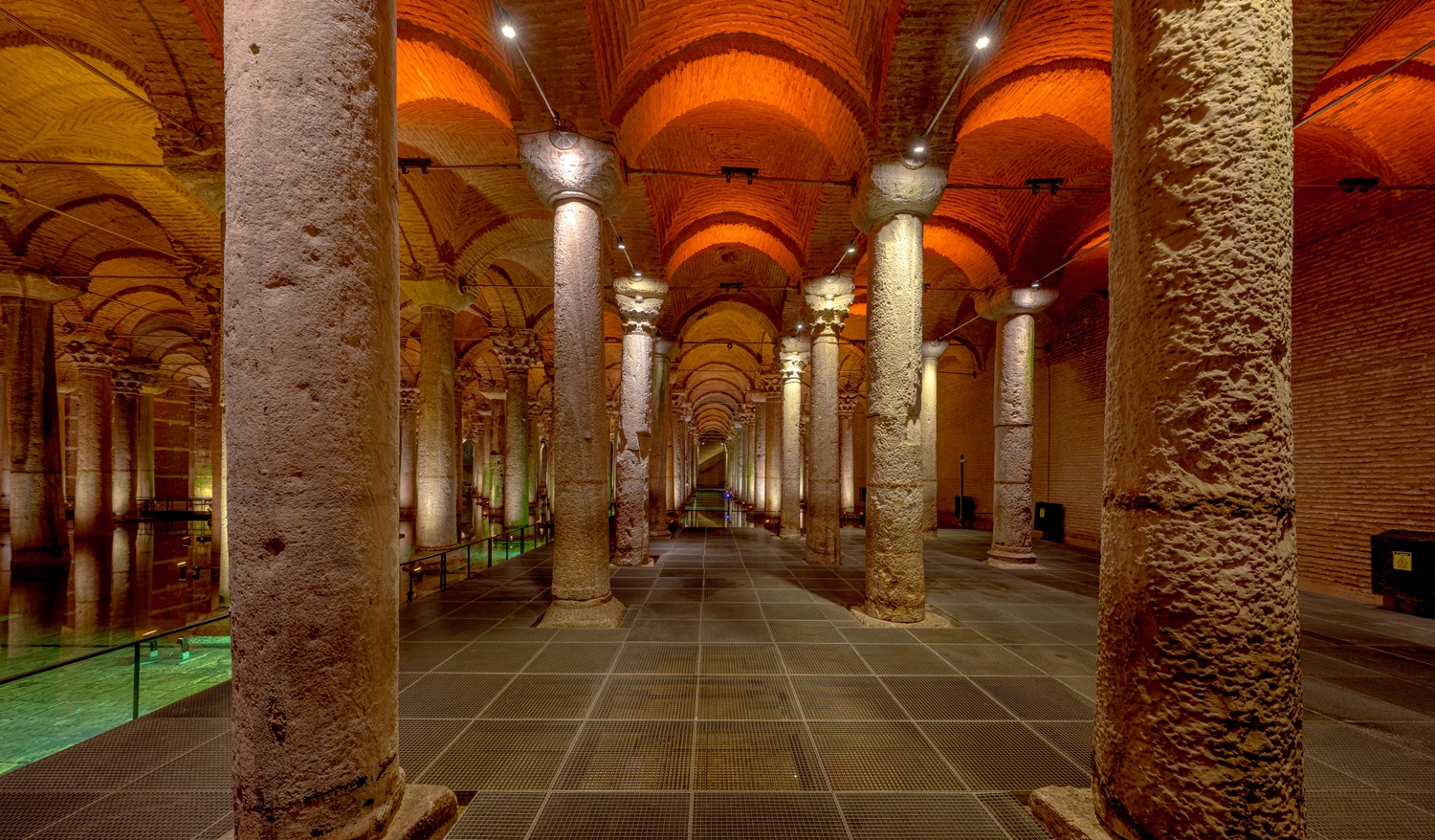
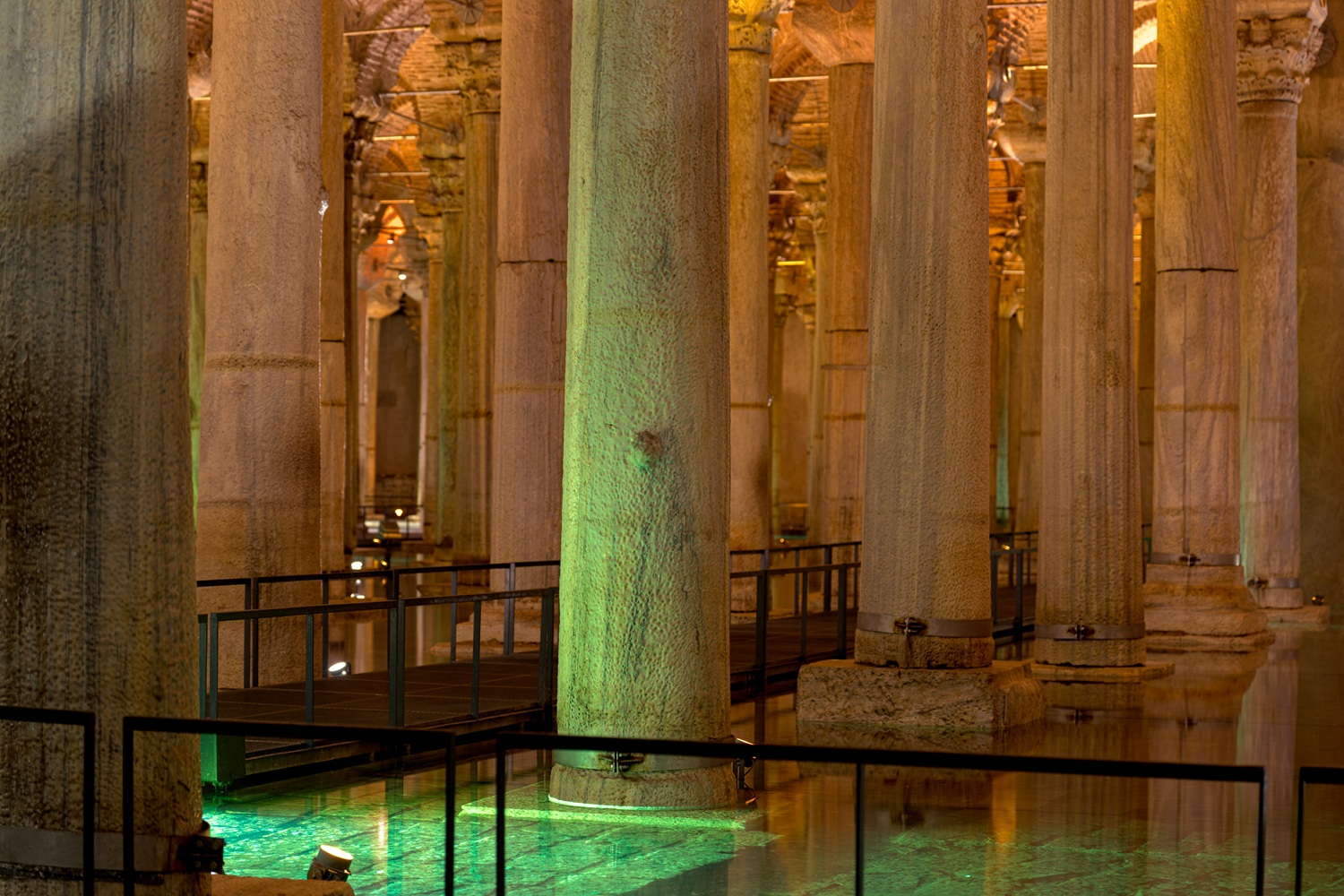
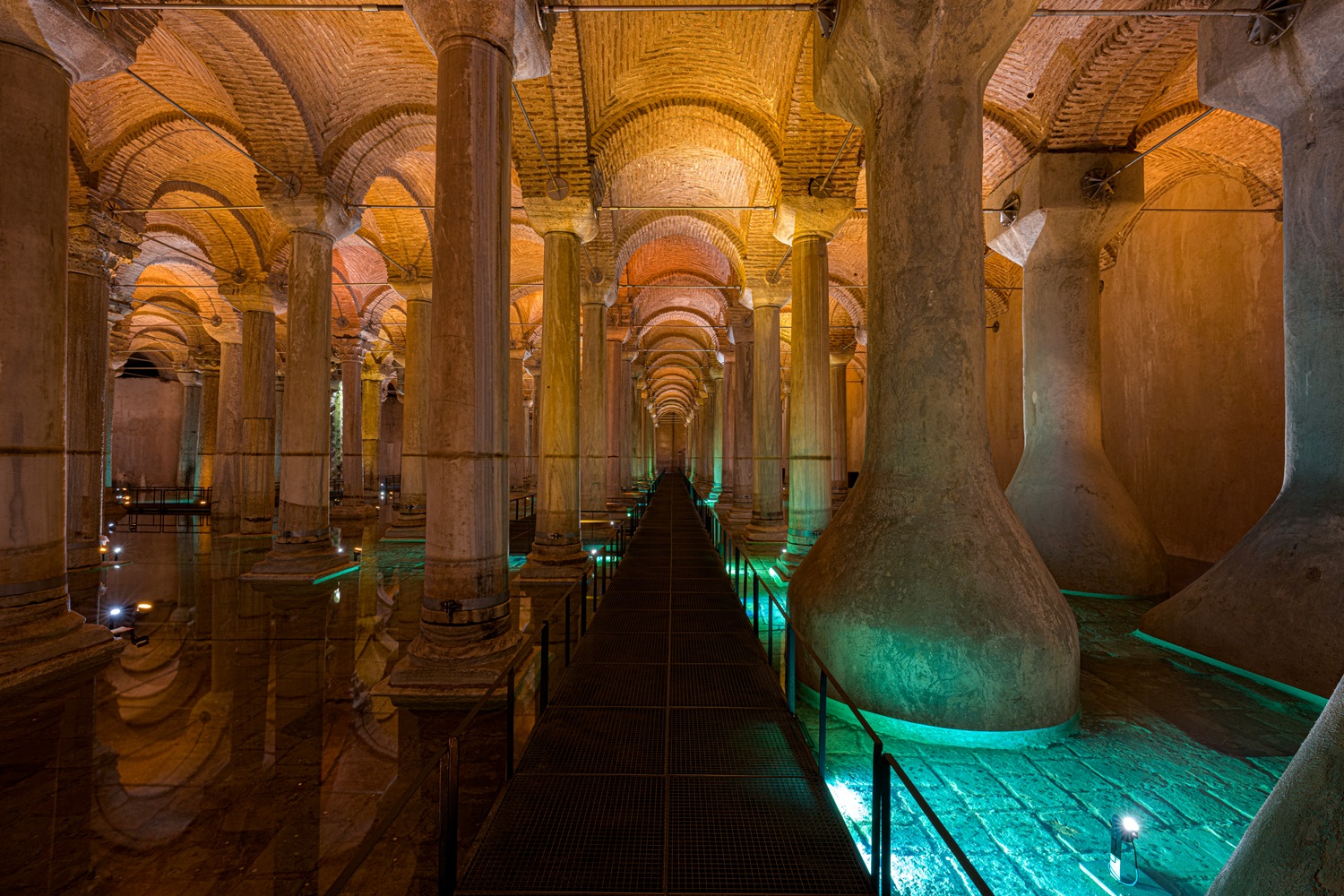
The interior contains a total of 336 columns, each approximately 9 meters high. These columns are arranged in 12 rows of 28 columns each, with a spacing of about 4.8 meters between them. Crafted from various types of marble, most of the columns are monolithic, while some consist of two pieces. Their capitals display a combination of Corinthian and plain styles, and the majority of the shafts are cylindrical in form.
The cistern’s brick walls, measuring 4.8 meters in thickness, and its floor were coated with Horasan mortar to ensure water resistance. Following the Conquest of Istanbul, the structure continued to be used for some time and eventually became a water source utilized by local residents as settlements expanded in the surrounding area.
Unknown to the Western world until the 16th century, the cistern was rediscovered by Petrus Gyllius between 1544 and 1555. Gyllius carefully documented the dimensions of the structure and the number of its columns. He also recorded that local residents drew water from the cistern through wells and even caught fish within it.
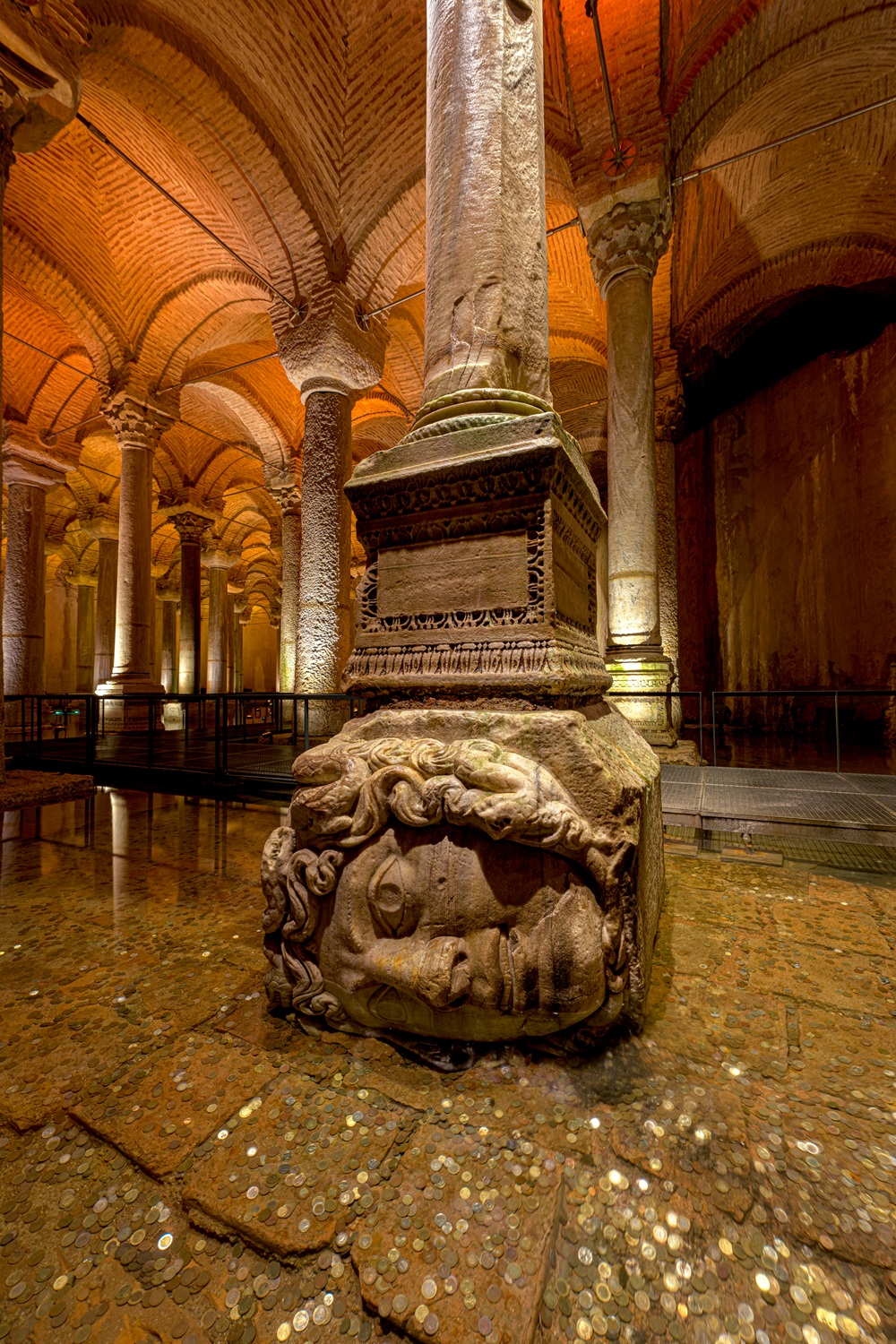
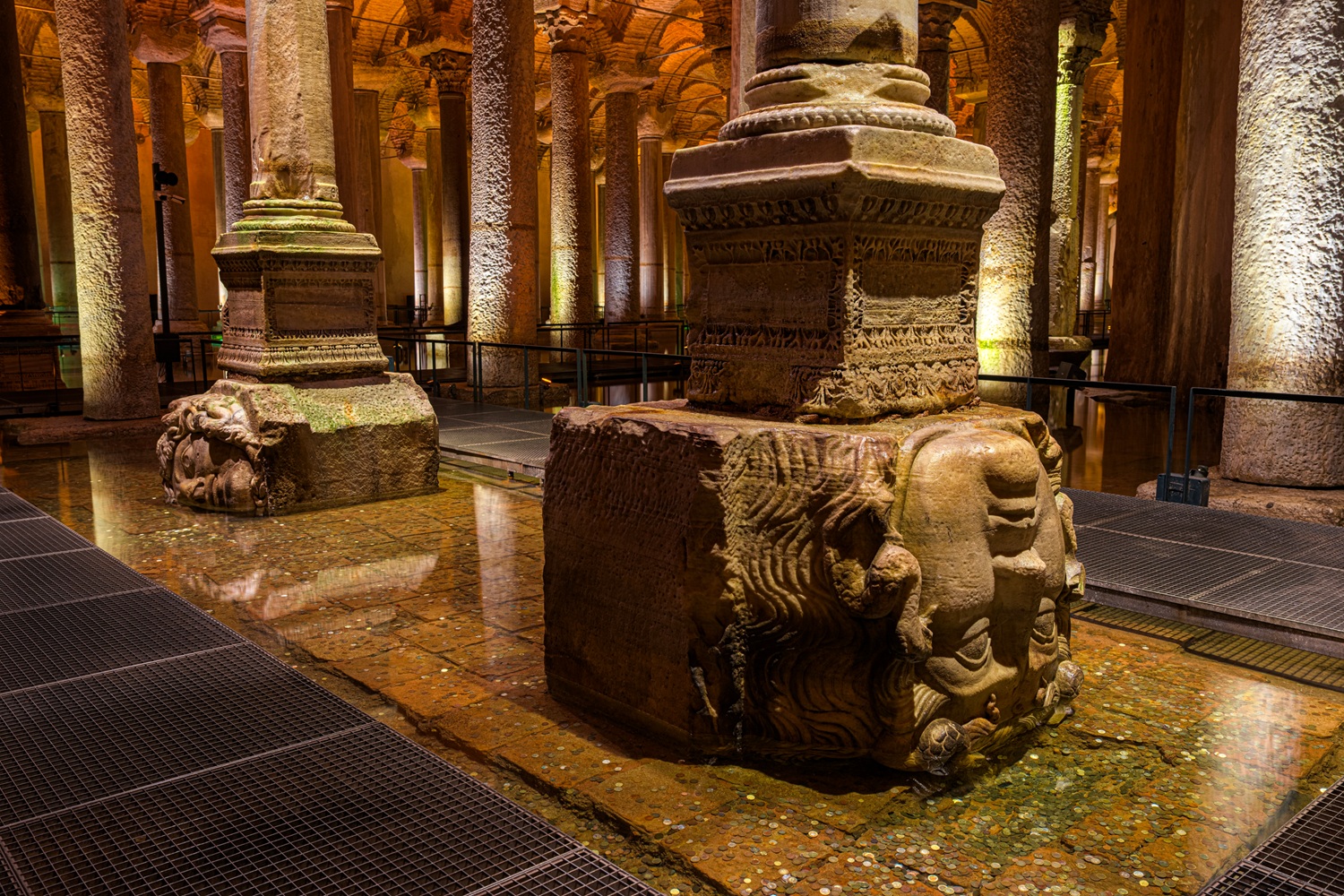
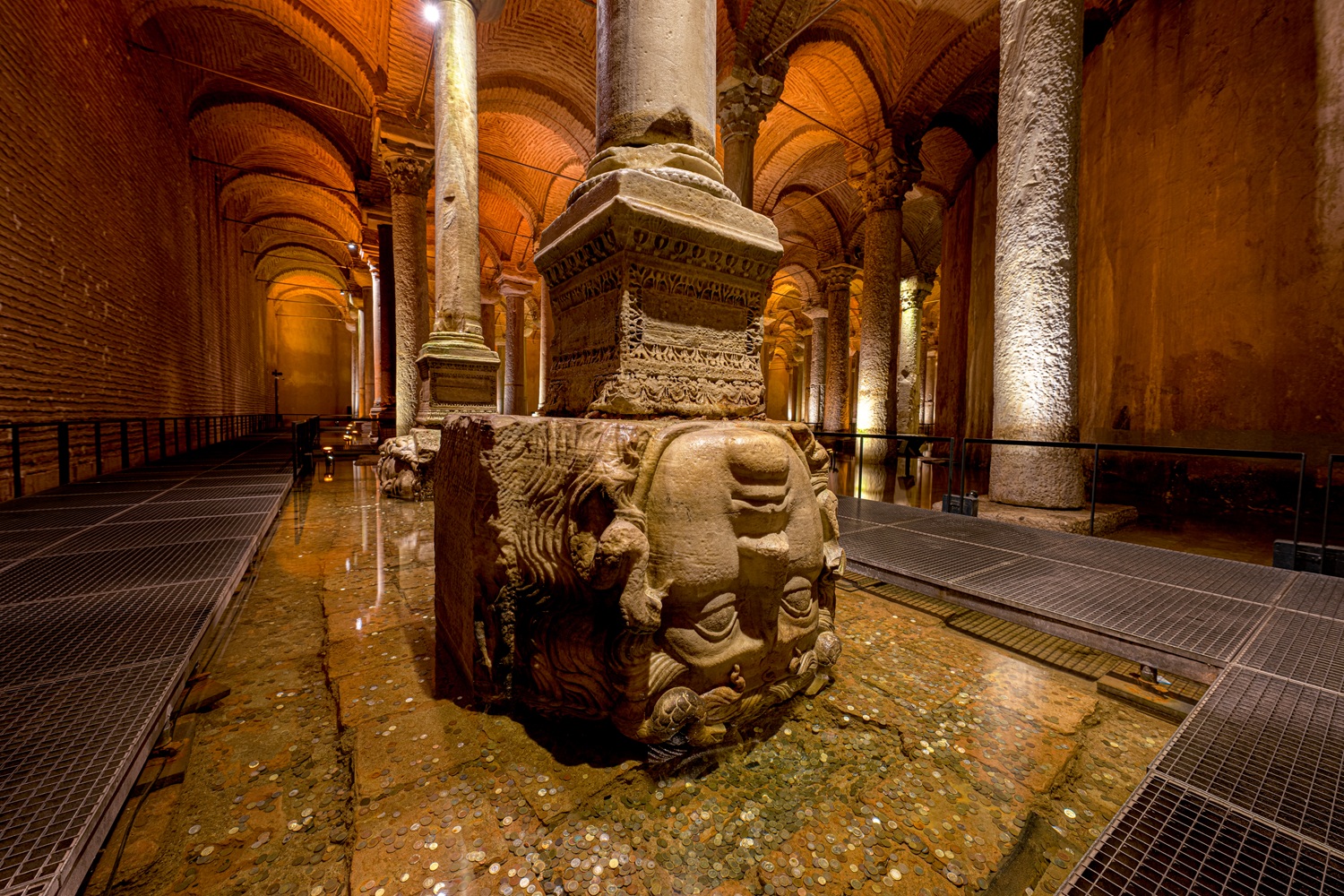
During the Ottoman period, the first major restoration was carried out by Architect Kayserili Mehmet Ağa during the reign of Sultan Ahmed III, while a second major restoration took place during the reign of Sultan Abdülhamid II. Various restoration works were also undertaken during the Republican era. Most notably, during the restoration project conducted by the Istanbul Metropolitan Municipality between 1985 and 1987, the famous Medusa-head column bases, which have since become symbols of the cistern, were uncovered. One of these heads is positioned upside down, while the other is placed sideways.
In Greek mythology, Medusa is known as one of the three Gorgon sisters whose gaze could turn people to stone. According to one legend, she possessed this power from birth, while another version recounts that she was transformed by Athena as a punishment. Perseus later beheaded Medusa and used her power as a weapon.
Today, the Basilica Cistern is one of Istanbul’s most visited tourist attractions. Reimagined through a modern museology approach, it hosts exhibitions, artistic events, and cultural programs, continuing to bring together the profound traces of history with contemporary artistic expression.
Gallery
History
1453
After the Conquest of Istanbul in 1453, the Basilica Cistern continued to serve the water needs of Topkapı Palace for some time. As the surrounding area gradually became populated, the cistern also emerged as a vital water source for the local community.
1544 - 1555
In the 16th century, the structure was “unnoticed” by Westerners until it was “rediscovered.” Between 1544 and 1555, the French naturalist and topography expert Petrus Gyllius, who lived in Istanbul, appears as the person who made this discovery. Gyllius was the first to measure the cistern’s dimensions and according to him, it was 336 feet long, 182 feet wide, and its circumference was 224 Roman steps. He also counted the columns and recorded that there were exactly 336 of them, as well as mentioning the existence of several wells on the top of the cistern. Gyllius’ statements about how people drew water with buckets, rowed boats, and used lamps for illumination inside the cistern, with air and light seeping through the wells, show that the locals were “aware” of the cistern at that time and this information has been passed down to the future.
1955 - 1960
In the Ottoman period, the Yerebatan Cistern underwent its first restoration during the reign of Sultan Ahmed III, and the second restoration during the reign of Sultan Abdulhamid II. In the following years, it continued to undergo various restoration efforts. Between 1955 and 1960, nine columns under the risk of collapse were covered with a thick layer of concrete to prevent further deterioration.
Alemdar, Yerebatan Cd. 1/3, 34110 Fatih/İstanbul

Every Day 09:00 - 19:00